
How to Choose Inline Skates: The Ultimate Guide
Choosing the right inline skates can feel overwhelming with so many options on the market. Whether you want to cruise along the Vltava river, boost your fitness level, or try tricks in a skatepark, your experience depends entirely on getting the right pair.
At Inlinespecial, we have been helping skaters for over 20 years. We’ve put together this straightforward guide based on real expert experience to help you avoid the most common mistakes and find your perfect ride.
1. The Biggest Myth: "Buy One Size Larger"
One of the most widespread errors is buying skates that are one size larger than your normal shoes to achieve immediate comfort. This is a mistake.
Skates need to fit tightly. Recreational soft-boot models are highly padded and will break in significantly after the first few rides. If a skate is too loose from the start, your heel will lift, your ankles might collapse inwards, you’ll lose control, and you will end up with painful blisters.
How a correct skate should feel when trying it on:
- Your toes should slightly touch the front end of the boot when standing straight.
- When you get into the skating position (knees bent, shins pushing forward), your toes should pull back slightly, and your heel must stay firmly locked in place without lifting.
- The boot must wrap tightly around your foot without creating painful pressure points.
2. How to Measure Your Foot (Mondopoint)
To find the exact size across different brands, you need to know your Mondopoint value – the precise length of your foot from the heel to your longest toe. Don't measure the insoles of your other shoes, as this is highly inaccurate.
3 Simple Steps to Measure Your Foot:
- Place a piece of A4 paper on the floor flat against a straight wall or piece of furniture.
- Put on the socks you plan to skate in, step on the paper, and press your heel firmly against the wall.
- Stand relaxed, hold a pencil completely upright (perpendicular to the paper), and draw a line at your longest toe. Measure the distance from the edge of the paper to the line in millimeters.
3. Choose the Right Boot Skeleton
How the skate is built determines how much support and comfort you will get:
- Soft boots (Měkké brusle): Typical for classic fitness skates. They offer maximum comfort, excellent ventilation, and thick inner padding. Perfect for recreational skaters and beginners.
- Hard boots / Plastic skeleton: Provide far superior ankle support, durability, and energy transfer. Excellent for urban freeskating, beginners who need extra ankle stability, or heavier skaters.
- Hybrid & Carbon boots: Advanced skates with minimal padding designed for high performance, speed skating, or aggressive use where maximum response is required.
4. Wheels and Frames Matter
The combination of frame material and wheel hardness changes how the skate handles different surfaces:
- Frames: Cheap models use plastic composite frames which flex and lose energy. High-quality aluminum or magnesium frames provide better power transfer and a much smoother ride (except for specific children's or aggressive models where composite works fine).
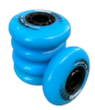
- Soft wheels (e.g., 82A, 83A): Grip the surface better, absorb vibrations from rough asphalt, and offer a comfortable ride. However, they wear down faster on rough trails.
- Hard wheels (e.g., 85A and above): Are faster, slide easier, and last longer, but you will feel more vibrations from uneven ground.
5. Common Mistakes to Avoid
- Ignoring Safety Gear: Even the most skilled skaters fall. A high-quality helmet and wrist guards are the absolute minimum you should wear on every single outing.
- Overestimating / Underestimating the Frame: Cheap plastic parts will limit your progress, while huge speed-skating wheels (3x110mm+) might be too fast and unstable for a complete beginner.
- Skipping Maintenance: Skates should be quiet. If you hear metallic clicking or grinding, your bearings need cleaning or your wheels need rotating to prevent uneven wear.
Still Unsure Which Inline Skates to Pick?
Choosing the perfect pair depends on the unique shape of your foot, your weight, and your skating goals. Sometimes, getting professional advice makes all the difference.
Visit our Inlinespecial shop at Kamenická 13, Prague 7. We will analyze your stance, and let you try different models right next to Letná Park to make sure you leave on the perfect set of wheels!
Related Guides
- Where to Skate in Prague for Beginners
- Best Inline Trails in Prague
- Inline Skating Safety Tips
- Mondo point in pictures (CZ)
- Most Common Skate Selection Mistakes (CZ)
Updated: July 2026

Author
Ing. Anna Krutina (roz. Malsová)
Raised on ice skates from early childhood, later focused on aggressive inline skating. Today she specializes in inline skates, technical advice and product expertise at Inlinespecial. She is also a mother of a young skater.
Frequently Asked Questions
Should I buy inline skates that are larger than my shoe size?
No. You should buy skates based on the exact millimeter length of your foot (Mondopoint). Skates will stretch and adapt to your feet after a few sessions. Buying them too large leads to instability and blisters.
What is Mondopoint?
Mondopoint is the official measurement system used for ski boots and inline skates. It represents the actual length of your foot in millimeters, measured from the heel to the tip of your longest toe.
What wheel hardness is best for city skating?
For regular fitness trails and paths, wheels with a hardness of 82A to 84A offer a great balance of comfort, grip, and durability. If you prefer speed and skate on very smooth asphalt, 85A wheels are an excellent option.